
Can You Fly with a 16-Cell Oxygen Battery? FAA Rules
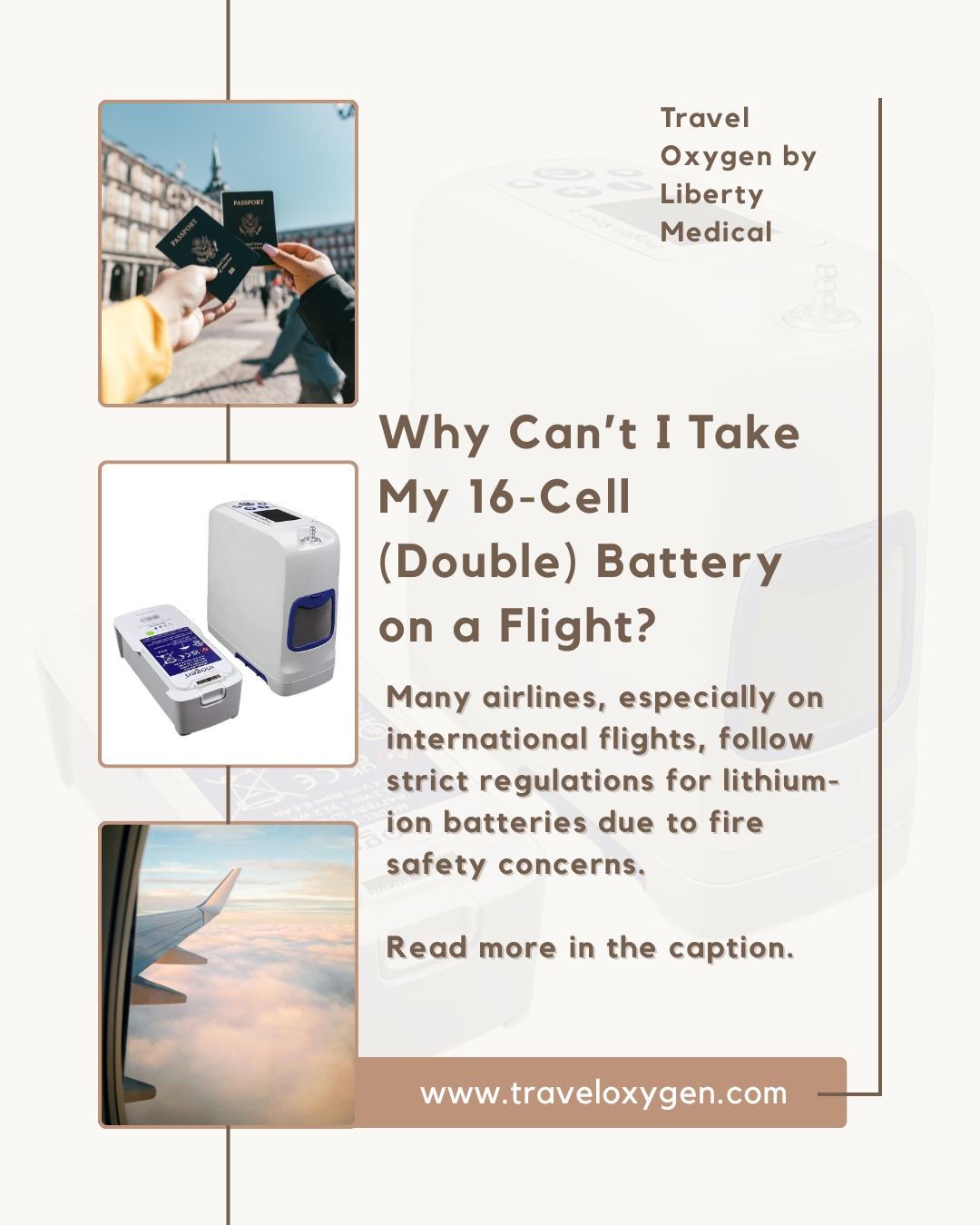

Can You Fly with a 16-Cell (Double) Battery? What Every Oxygen Traveler Needs to Know

Planning a trip should be exciting—not stressful. If you’re traveling with a portable oxygen concentrator (POC), one of the most common questions is whether your batteries are approved for air travel. Many travelers are surprised to learn that airlines don’t base their rules on the size of the battery or the number of cells. Instead, they look at something called watt-hours (Wh).
Understanding these rules before your trip can help you avoid delays at the airport and ensure you have enough power to safely enjoy your travels.
Why Do Airlines Have Battery Restrictions?
Lithium-ion batteries power most portable oxygen concentrators because they’re lightweight, reliable, and rechargeable. While these batteries are very safe when used properly, they can pose a fire risk if damaged or defective. That’s why aviation authorities around the world have established limits on the size of lithium-ion batteries passengers can bring onboard.
According to the Federal Aviation Administration (FAA), battery rules are based on watt-hours (Wh), which measure how much energy a battery stores—not how many cells it contains.
• Batteries up to 100 Wh are generally allowed in carry-on baggage without airline approval.
• Batteries between 101 Wh and 160 Wh are usually permitted with airline approval. Most airlines limit passengers to two spare batteries in this range.
• Batteries over 160 Wh are generally not allowed on passenger aircraft.
Because many 16-cell (double) batteries exceed 160 Wh, they often cannot be taken on commercial passenger flights.
Why This Matters When Flying with Oxygen
When you’re flying with oxygen, having enough battery power isn’t optional—it’s essential.
Most airlines require passengers using a portable oxygen concentrator to bring enough battery power to operate the device for at least 150% of the expected flight time. This requirement helps ensure you have enough oxygen if your flight is delayed, diverted, or you’re waiting on the tarmac longer than expected.
For example:
• A 4-hour flight may require at least 6 hours of battery life.
• A 6-hour flight may require at least 9 hours of battery life.
Many travelers assume one large battery is the easiest solution. Unfortunately, if that battery exceeds the airline’s watt-hour limit, it may not be allowed onboard.
A Better Solution: Carry Multiple Standard Batteries
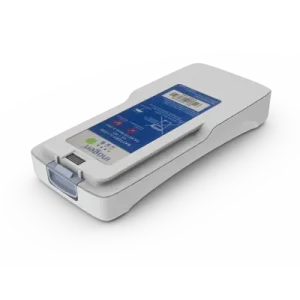
Instead of relying on one oversized battery, many experienced travelers bring multiple FAA-compliant batteries.
Using several standard batteries allows you to:
• Meet airline battery requirements.
• Stay within FAA safety guidelines.
• Continue using your portable oxygen concentrator throughout your trip.
• Replace batteries easily during long travel days.
This approach is often the simplest way to meet airline requirements while avoiding problems at airport security.
Renting Oxygen for Air Travel
If you don’t travel often, purchasing additional batteries or a new portable oxygen concentrator may not make financial sense.
Renting oxygen equipment is an excellent option for vacations, family visits, cruises, destination weddings, business trips, and seasonal travel.
A portable oxygen concentrator rental provides:
• FAA-approved equipment for most airlines.
• Batteries that meet airline travel requirements.
• Reliable oxygen without the cost of purchasing a new unit.
• Expert guidance before your trip.
For many seniors, renting oxygen offers peace of mind and flexibility without a long-term commitment.
Tips for Flying with Oxygen

Traveling with oxygen can be smooth and stress-free when you plan ahead.
Here are a few helpful tips:
• Contact your airline well before your departure date.
• Verify that your portable oxygen concentrator is FAA approved.
• Check the watt-hour rating on every battery you’ll be bringing.
• Pack all lithium-ion batteries in your carry-on luggage—never in checked baggage.
• Bring enough battery power to meet your airline’s 150% battery requirement.
• Carry copies of your oxygen prescription and any paperwork your airline requests.
• Arrive at the airport early to allow extra time for security screening.
Flying with Oxygen Doesn’t Have to Be Complicated
Thousands of people safely fly with oxygen every year. Understanding battery regulations before you leave can make the difference between a smooth travel day and an unexpected delay at the airport.
If your 16-cell battery exceeds the FAA’s allowable limit, don’t panic. There are often better alternatives, including using multiple standard batteries or renting oxygen equipment specifically designed for air travel.
Whether you’re visiting family, taking a long-awaited vacation, or heading on a cruise, having the right equipment helps you travel with confidence.
Need Help Renting Oxygen for Your Trip?

Travel Oxygen by Liberty Medical has helped travelers fly with oxygen for decades. We specialize in portable oxygen concentrator rentals, airline travel guidance, and helping customers understand battery requirements before they leave home.
Our team can answer questions about airline policies, battery life, FAA-approved portable oxygen concentrators, and renting oxygen for domestic or international travel.
Call 800-375-6060 today to speak with one of our travel oxygen specialists and let us help you prepare for your next adventure with confidence.